
The Problem We Often Overlook
When we think about our pet’s health, we instantly think of vaccinations, nutritious food, or regular grooming. But there’s one aspect silently ignored by most pet parents – dental health.
Just like us, dogs and cats develop plaque, tartar, and gum infections over time. The difference? They can’t tell us when it hurts. Studies show that nearly 80% of dogs and 70% of cats above three years of age already suffer from some form of dental disease.
And yet, most pet parents believe a little bad breath is “normal.” But behind that smell, bacteria are silently multiplying and damaging gums, loosening teeth, and even spreading infections to the heart, liver, and kidneys.
Dental disease isn’t just a mouth issue — it’s a whole-body health concern.
Luna’s Story – A Wake-Up Call for Every Pet Parent
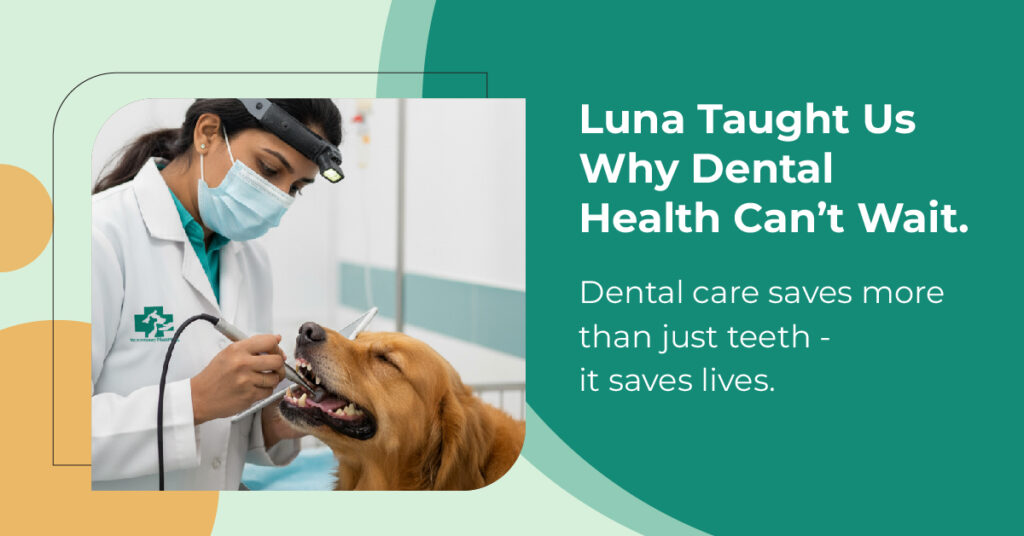
Luna, a four-year-old golden retriever, was her family’s joy.
Always playful, always affectionate – until one day, her mom noticed a faint smell from her mouth. They assumed it was food-related and ignored it.
Weeks later, Luna began avoiding her favorite crunchy biscuits. Her gums looked slightly red, and she drooled more than usual.
When her family finally brought her to SKS Veterinary Hospital – Abiramapuram the diagnosis was clear – severe gingivitis and early periodontal disease.
The infection had already spread below her gumline Her family was shocked – “She never showed any pain!” they said. And that’s the truth about pets: they endure quietly.
Luna’s story isn’t rare – it’s the reality for thousands of pets across India whose dental issues go unnoticed until it’s too late.
How Luna Got Her Smile Back
Our veterinary dental team at SKS performed a thorough oral assessment under mild sedation.
Here’s how we treated her case step-by-step:
Detailed oral examination to assess the level of infection.
Professional ultrasonic scaling – a deep cleaning above and below the gumline.
Polishing to smooth tooth surfaces and prevent plaque from sticking again.
Root care and antibacterial rinse to protect against recurrence.
Home care education – brushing technique, dental chews, and diet tips.
Within days, Luna’s energy returned. Her breath was fresh, her gums turned pink again, and she started enjoying her crunchy treats like before.
Her mom said tearfully,
“We didn’t realize how much pain she was hiding until we saw her playful again.”
That single moment is why dental awareness matters and why we created this blog.
Understanding the Dental Disease Cycle
To protect your pet, it helps to know how dental disease develops:
Plaque Formation (Day 1–3): Bacteria and food particles form a sticky film on teeth.
Tartar Build-up (Week 1–2): Plaque hardens into tartar — rough and full of bacteria.
Gingivitis (Weeks 3–8): Gums become red, swollen, and painful — but it’s still reversible here.
Periodontitis (Month 2+): Infection spreads under the gums, damaging bone and ligaments.
Systemic Infection (Later stage): Bacteria enter the bloodstream and start harming internal organs.
By the time your pet’s breath smells bad or gums look red, the disease is already in progress.
Signs Pet Parents Should Never Ignore
Easy-to-spot:
Persistent bad breath
Yellow or brown deposits on teeth
Red, swollen, or bleeding gums
Drooling or pawing at the mouth
Avoiding hard food or chew toys
Often missed:
Reduced enthusiasm to play
Preferring soft food suddenly
Rubbing face against furniture
Irritability without reason
If you notice even one of these, book a dental check-up – not next month, this week.
What You Can Do: A Simple Dental Care Routine
Healthy smiles begin at home. Here’s how to make it easy:
- Brush regularly: 3–5 times a week for at least 2 minutes using pet-safe toothpaste.
- Choose the right tools: Use a soft-bristled pet toothbrush or finger brush.
- Offer dental treats or toys: Chewing helps reduce mild plaque.
- Schedule annual professional cleanings: A complete scaling once a year keeps major problems away.
- Keep track: Regularly lift your pet’s lip to check for redness, smell, or buildup.
Small steps, big difference.
Common Myths Indian Pet Parents Should Stop Believing
Myth 1: “Dry food cleans my pet’s teeth.”
➡️ Truth: Kibble helps reduce some buildup, but not the tartar below the gumline where disease starts.
Myth 2: “If my pet is eating, there’s no pain.”
➡️ Truth: Pets hide pain instinctively. Many eat through severe discomfort.
Myth 3: “Dental cleaning is risky.”
➡️ Truth: Modern anesthesia is extremely safe when monitored by professionals. Untreated infection is far riskier.
Myth 4: “Puppies and kittens don’t need dental care.”
➡️ Truth: Early brushing habits make lifelong dental hygiene effortless.
Expert Insight from SKS Veterinary Hospital
Dr. A. Sha Arun from SKS Veterinary Hospital, Bannerghatta branch, reminds pet parents that dental care is an essential part of a pet’s overall health.
Bad breath, drooling, pawing at the mouth, or difficulty eating are often the first signs of an underlying oral or dental disease. Ignoring these symptoms can lead to pain, infection, and even more serious health issues affecting the heart, kidneys, and liver.
To help spread awareness, Dr. Arun has shared a short educational video emphasizing the importance of regular dental check-ups and home care. The reel serves as a quick reminder that preventive dental care not only keeps your pet’s teeth clean but also enhances their overall well-being and quality of life.
Book a professional veterinary dental check-up at your nearest SKS branch today and ensure your pet enjoys the comfort and confidence of a healthy smile.
How SKS Veterinary Hospital Keeps Dental Care Stress-Free
At SKS, we know how anxious pets (and parents) can be about dental treatments. That’s why we use a Fear-Free, gentle-care approach:
Calm, pet-friendly environment
Gentle sedation and painless ultrasonic scaling
Modern monitoring for safety during anesthesia
Fast recovery and comfort-focused post-procedure care
Every pet receives personalized attention – whether it’s a nervous cat or an elderly dog. Our goal is simple: Healthy smiles, happy families.
Be Your Pet’s Dental Hero
Your pet can’t brush their teeth. They can’t ask for help.
But you can – by making dental care part of your love and routine.
Just one professional cleaning a year can:
✅ Add 2–3 years to your pet’s life
✅ Prevent painful infections
✅ Keep every cuddle fresh and healthy
So today, look into your pet’s eyes and ask –
“When was the last time I checked their smile?”
Because love isn’t just about feeding or playing – It’s about keeping them healthy from nose to tail… and every tooth in between.
Frequently Asked Questions about Dental Care for Pets
Pet dental health is crucial because 80% of dogs and 70% of cats over age 3 develop dental disease. More importantly, dental disease doesn’t just affect the mouth. When bacteria from gum disease enter the bloodstream, they can damage the heart, liver, and kidneys — potentially shortening your pet’s lifespan by 2-3 years. Professional pet dental care prevents these complications.
The earliest signs are often the most subtle — bad breath is the #1 warning sign. Other early indicators include:
Yellow or brown deposits on teeth
Mild gum redness
Occasional drooling
Reluctance to chew hard toys
Advanced signs include difficulty eating, loose teeth, facial swelling, and behavioral changes. Don’t wait for advanced signs — schedule a checkup if you notice even early warning signs.
Most healthy pets benefit from professional pet dental cleaning at least once annually. However, pets with active dental disease may need cleaning every 6 months. Senior pets (over 10 years) often require annual cleanings. Your SKS Veterinary Hospital veterinarian will recommend the ideal schedule for your pet’s age, breed, and current oral health status.
Yes, modern veterinary anesthesia is extremely safe for senior pets. In fact, pre-operative blood work helps ensure your older pet is healthy enough for the procedure. Often, older pets benefit most from dental cleaning because they frequently have significant tartar buildup. The risks of untreated dental disease in senior pets far exceed the minimal anesthetic risk.
Professional pet dental cleaning costs typically range from ₹3,000 to ₹12,000+ depending on:
Your pet’s age and size
Severity of existing dental disease
Number of teeth requiring extraction (if any)
Geographic location (urban centers may cost more)
However, remember: preventive dental care is 60-70% cheaper than emergency treatment. One pet parent paid ₹8,000 for preventive cleaning but would have spent ₹20,000+ on emergency extraction and antibiotics if they’d waited.
Yes, absolutely! Home tooth brushing is the single most effective prevention strategy. Pet parents who brush their pet’s teeth 3-5 times weekly see significantly fewer dental problems. However, home brushing cannot replace professional cleaning — bacteria re-colonize teeth within 24-48 hours, and tartar still accumulates below the gumline. Combine home brushing with annual professional cleaning for optimal results.
Always use pet-safe toothpaste — never human toothpaste. Human toothpaste contains:
Fluoride (toxic to pets)
Xylitol (can cause liver damage in dogs)
Detergents (cause digestive upset)
Pet toothpastes are specially formulated and safe to swallow. Popular options include enzymatic toothpastes and those with chicken or seafood flavoring. Your vet can recommend specific brands.
For optimal pet dental health, offer:
High-quality kibble — especially dental-specific formulas designed to reduce plaque
Raw or steamed carrots — natural abrasive action cleans teeth
Dental chews — look for VOHC (Veterinary Oral Health Council) approval
Crunchy vegetables — helps reduce tartar buildup
Avoid:
Soft/wet food (increases plaque)
Sugary treats
Human snacks and table scraps
Cooked bones (sharp fragments damage teeth)
Sticky treats (contribute to tartar)
At SKS Veterinary Hospital, we use fear-free handling techniques specifically designed to reduce anxiety. We also offer:
Pre-procedure calming (sedation options)
Quiet waiting areas
Minimal time in clinic
Experienced, gentle handlers
Tell us about your pet’s anxiety during booking, and we’ll create a customized plan to keep them calm and comfortable.
These are stages of pet dental disease:
Gingivitis (Early Stage):
Only gums are inflamed
Reversible with professional cleaning and home care
Causes bad breath and mild discomfort
No permanent damage yet
Periodontitis (Advanced Stage):
Infection spreads below the gumline
Damages bone and tooth ligaments
Causes loose teeth, pain, and possible tooth loss
Not fully reversible (requires ongoing management)
This is why early intervention is crucial — gingivitis can be reversed, but periodontitis cannot.
A typical appointment takes 1-3 hours depending on:
Extent of dental disease
Number of teeth requiring extraction
Your pet’s age and overall health
Anesthesia recovery time
Most of this time is spent under anesthesia. Your pet will be monitored continuously and recovered with comfort measures before you pick them up.
Most pets experience minimal pain after cleaning. If teeth were extracted, mild discomfort is normal for 2-3 days. We provide:
Post-operative pain medication
Soft food recommendations
Activity restrictions
Follow-up instructions
Call us immediately if your pet shows signs of severe pain, excessive swelling, or difficulty eating after the procedure.