
The Heart That Unconditionally Loves You Deserves Looking After Too.
Every day, our pets fill our homes with unconditional love, loyalty, and companionship. They celebrate our happiest moments and quietly comfort us during our hardest days. Yet, while we carefully monitor their diet, vaccinations, and grooming, one of the most important aspects of their health often goes unnoticed—their heart.
Unlike many illnesses that show obvious warning signs, heart disease in dogs and cats frequently develops silently. By the time symptoms become visible, the condition may already have progressed significantly.
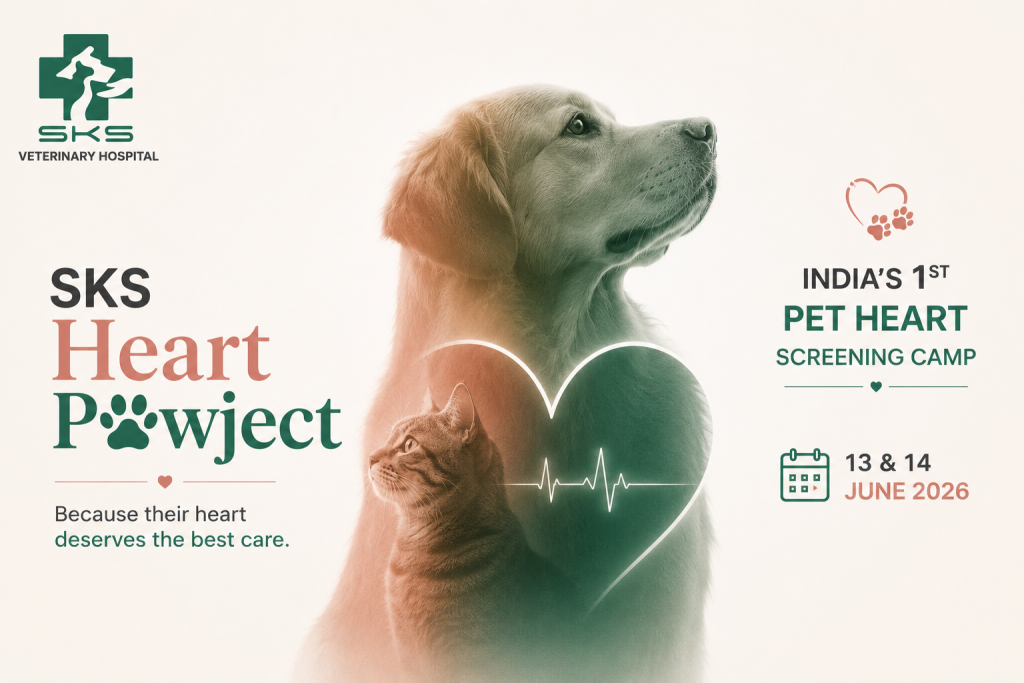
This is the very reason behind SKS Heart Pawject—an initiative by SKS Veterinary Hospital dedicated to raising awareness about pet heart disease and promoting the importance of early cardiac screening.
What is SKS Heart Pawject?
SKS Heart Pawject is a preventive healthcare initiative aimed at educating pet parents about cardiac diseases and making advanced heart screening more accessible.
Our mission is simple:
Detect early. Treat better. Help pets live longer, healthier lives.
Through specialist consultations and advanced diagnostic tools, SKS Heart Pawject helps identify hidden heart conditions before they become life-threatening.
Why Should Pet Owners Be Concerned About Heart Disease?
Heart disease is far more common than many people realize.
According to peer-reviewed veterinary literature:
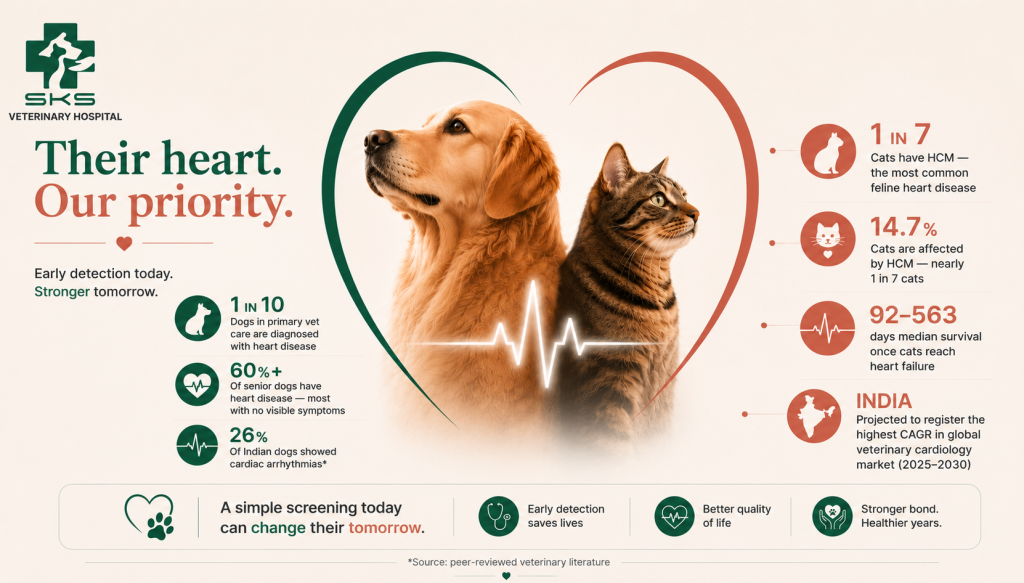
1 in 10 dogs visiting primary veterinary clinics are diagnosed with heart disease.
More than 60% of senior dogs may have underlying cardiac conditions, many without visible symptoms.
Nearly 1 in 7 cats are estimated to have Hypertrophic Cardiomyopathy (HCM), the most common feline heart disease.
An Indian veterinary study found that over 26% of dogs evaluated for generalized illness showed cardiac arrhythmias, with Labradors having the highest breed-specific occurrence.
The most concerning aspect?
Many pets continue eating, playing, and behaving normally while heart disease quietly progresses.
Why Heart Disease Often Goes Undetected
Animals are naturally good at hiding illness.
In the wild, showing weakness could make an animal vulnerable. Even our domesticated pets retain this instinct.
Many cardiac conditions have what veterinarians call a “subclinical phase,” where the disease exists but outward signs are absent.
A dog may still wag its tail.
A cat may still jump onto the sofa.
Meanwhile, the heart could be gradually enlarging, weakening, or developing abnormal rhythms.
This is why routine screening is often the only way to detect problems early.
Common Warning Signs
While many pets show no symptoms initially, owners should watch for:
Tiring easily during walks or play
Excessive panting
Persistent coughing
Rapid or laboured breathing
Reduced activity levels
Fainting episodes
Sudden weakness
Loss of appetite
Restlessness during sleep
If your pet exhibits any of these signs, a veterinary cardiac evaluation is strongly recommended.
Which Pets Are at Higher Risk?
Dogs
Heart disease can affect any breed, but certain dogs have a higher genetic predisposition.
Large and Giant Breeds
Labrador Retriever
Golden Retriever
German Shepherd
Dobermann
Boxer
Great Dane
Saint Bernard
Rottweiler
Newfoundland
Mastiff
These breeds are particularly susceptible to Dilated Cardiomyopathy (DCM), a condition where the heart muscle gradually weakens.
Senior Dogs
Dogs over five years of age should ideally undergo periodic cardiac evaluations, even if they appear perfectly healthy.
Cats
Cats are equally vulnerable to heart disease, especially Hypertrophic Cardiomyopathy (HCM).
Breeds with increased risk include:
Maine Coon
Ragdoll
Persian
British Shorthair
Bengal
Sphynx
However, mixed-breed cats can also develop HCM, making routine screening important for all senior cats.
What Happens During a Heart Screening?
A comprehensive cardiac assessment may include:
Specialist Cardiac Consultation
A detailed physical examination and discussion about your pet’s lifestyle, symptoms, and medical history.
Heart Auscultation
Listening for abnormal heart sounds or murmurs using a stethoscope.
Electrocardiogram (ECG)
Records the electrical activity of the heart and helps detect rhythm abnormalities.
Blood Pressure Measurement
High blood pressure can contribute to serious heart complications.
Thoracic X-Ray
Provides information about heart size and the condition of the lungs.
Echocardiography (2D Echo)
An ultrasound examination that allows veterinarians to visualize the heart chambers, valves, and blood flow in real time.
Together, these investigations provide a complete picture of your pet’s cardiac health.
Why Early Detection Matters
Research consistently shows that early diagnosis significantly improves outcomes.
Many heart conditions can be effectively managed for years with appropriate medication, dietary adjustments, and regular monitoring.
Early intervention can help:
Slow disease progression
Improve quality of life
Prevent emergencies
Reduce the risk of heart failure
Increase overall survival time
A simple screening today could add years of healthy companionship.
India’s First Pet Heart Screening Camp
To bring greater awareness to veterinary cardiology, SKS Veterinary Hospital is proud to launch India’s First Pet Heart Screening Camp under the SKS Heart Pawject initiative.
Venue
SKS Veterinary Hospital
Lotus Plaza, Maddilapalem, Visakhapatnam
Dates
13th & 14th June 2026
Who Can Participate?
Dogs and cats
Especially recommended for pets above 5 years of age
Large and giant breed dogs
Breeds predisposed to cardiac conditions
Pets showing any respiratory or exercise-related symptoms
A Message to Every Pet Parent
Our pets trust us completely.
They cannot tell us when their heart begins to struggle.
They cannot explain why they get tired more quickly.
They simply continue loving us the only way they know how.
Perhaps the greatest gift we can give them in return is the chance for a healthier future.
A routine heart screening may seem small, but it could make all the difference.
Because the heart that unconditionally loves you deserves looking after too.
About SKS Veterinary Hospital
Founded in 2003, SKS Veterinary Hospital is one of India’s leading multi-specialty veterinary healthcare providers, offering advanced diagnostics, surgery, emergency care, specialist consultations, and preventive healthcare across multiple cities.
Through initiatives like SKS Heart Pawject, we remain committed to improving the quality of life for pets and strengthening the bond between pets and the families who love them.